Every spring in Cape Town, the same pattern repeats. A few wasps appear near an entrance, a bin store, or a playground. Within weeks they are a colony, and by mid-summer a facility manager is dealing with stings, complaints, and a nest in a place nobody can safely reach. For schools heading into the long holidays, restaurants with outdoor seating, retail centres, and estates, wasp control in Cape Town is a seasonal safety issue, not a nuisance.
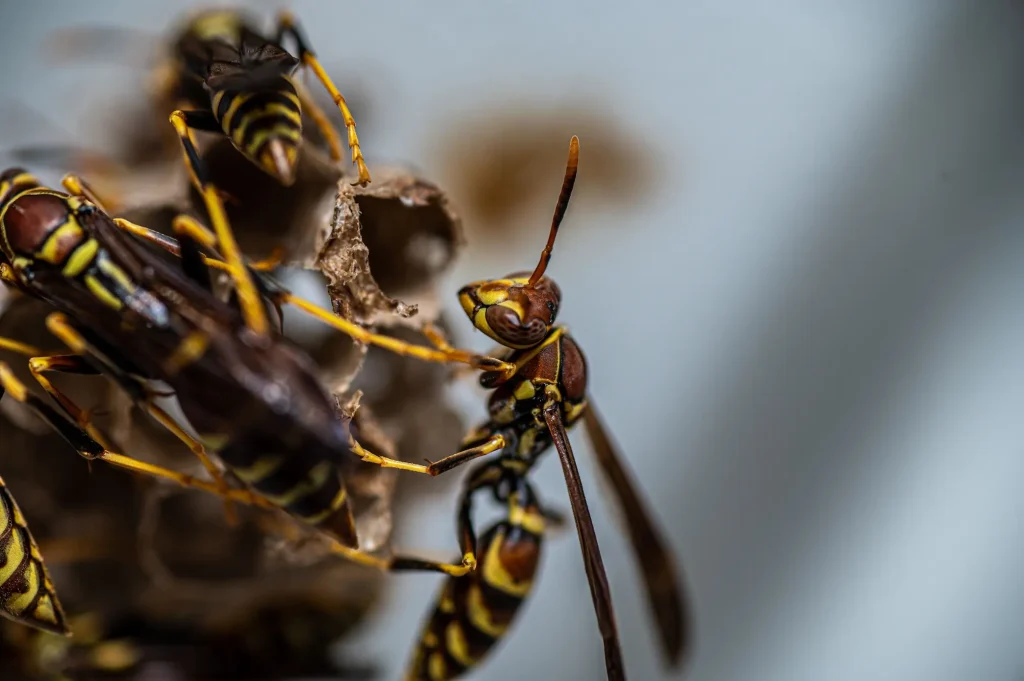
Cape Town’s problem is not ordinary wasps. The city has two invasive species, the German wasp (Vespula germanica) and the European paper wasp (Polistes dominula). The German wasp was first established at Kirstenbosch in 1972, with a second wave of invasion in 2001, and the European paper wasp was first detected in Kuils River in 2008, according to an ecologist writing on the spread of both species. The City of Cape Town has described the European paper wasp as a prolific breeder that occurs at high densities, mainly in the northern suburbs (City of Cape Town).
Both species are designated Category 1b invasive alien species under the National Environmental Management: Biodiversity Act (NEMBA), Act 10 of 2004 (City of Cape Town media release). Separately, the Occupational Health and Safety Act 85 of 1993 requires employers to provide a working environment that is safe and without risk to health. A known nest near staff, visitors, or learners falls squarely inside that duty.
What Is Wasp Control in Cape Town?
Professional wasp control is the identification, treatment, and removal of active wasp nests, combined with measures that reduce the chance of a nest returning. For commercial and institutional properties in Cape Town, wasp control typically includes:
- Site inspection to locate active and developing nests, including those in roof voids, wall cavities, vents, and ground-level holes
- Identification of the species, since German wasps and European paper wasps nest differently
- Treatment and safe removal of nests by trained technicians with protective equipment
- Non-secondary toxic treatments where relevant, particularly near food areas, animals, and birds
- Follow-up inspection to confirm the nest is inactive and check for new ones
- Advice on sealing entry points and managing food and waste attractants
The difference between species matters. European paper wasps always nest above ground, while German wasps mostly nest underground but can also nest in vents and holes in buildings (source). A German wasp nest may show little more than an entrance hole, which is part of why hidden nests are so often found by accident.
Why Wasp Control in Cape Town Matters for Businesses
1. Legal and Compliance Duties
Both invasive wasp species carry Category 1b status under NEMBA, and the OHS Act’s general duty to maintain a safe working environment applies to any employer who knows, or should know, that a nest sits near people. A documented inspection and treatment record shows that a property owner or employer acted on a known risk.
2. Sting Risk and Health
Wasp stings are painful, and the City of Cape Town warns that the sting of these invasive species is particularly painful (News24). For anyone allergic, a sting can become an emergency. Unlike bees, many wasps can sting repeatedly when defending a nest, and disturbing a nest can trigger a swarming response. In schools, care facilities, and food service, the combination of high foot traffic and allergic individuals raises the stakes.
3. Reputation and Customer Experience
Wasps hovering over a café terrace, a school playground, or a retail entrance are noticed immediately by customers and parents. German wasps are scavengers that will try to take meat from a plate, which makes outdoor dining and bin areas a natural target. A property visibly struggling with wasps looks poorly managed.
4. Operational Risk and Disruption
Active nests near doors, loading bays, or outdoor work areas can force closures and interrupt operations. The City has noted past seasons where workers harvesting grapes and other fruit were stung by German wasps, a reminder that outdoor work in agricultural and packhouse settings is directly affected (News24).
Why Outsource Wasp Control in Cape Town?
Many businesses first try to deal with a nest themselves. DIY removal commonly leads to multiple stings, increased aggression from the colony, nests being pushed deeper into structures, and incomplete removal that leaves an ongoing infestation (Nurture Group). It also fails the basic test an employer faces afterwards: where is the record of what was done, by whom, and with what protection?
A professional provider offers:
- Trained technicians with protective equipment, working with a defined procedure
- Correct species identification and nest-specific treatment
- Safe access to nests in roofs, cavities, and elevated positions
- Documented inspection and treatment records
- Scheduled follow-up rather than a once-off response
- Integration with ongoing pest control so wasps are managed alongside other pests
Facilities That Need Wasp Control in Cape Town
Schools, Creches, and Holiday Programmes With children outside for long hours over the festive season, playgrounds, sports fields, and entrances need regular inspection so children can play without the risk of stings.
Restaurants, Cafés, and Food Service Outdoor seating, food waste, and bin stores attract scavenging wasps, which creates both a customer experience and a food safety concern.
Retail Centres and Estates Large, high-traffic outdoor areas with landscaping, parking structures, and shared amenities offer plenty of nesting sites and plenty of people at risk.
Food and Beverage Producers, Farms, and Packhouses Fruit, sugar, and protein sources draw wasps, and outdoor workers are exposed during harvest and loading.
Healthcare and Care Facilities Residents and patients may be more vulnerable to stings and allergic reactions, making early nest detection essential.
The Haztech Approach to Wasp Control in Cape Town
Haztech provides wasp control as part of its professional pest control service for Cape Town businesses and institutions:
- Thorough site inspection covering buildings, roof lines, vents, landscaped areas, and bin stores
- Species identification and nest-specific treatment plans
- Non-secondary toxic treatments where relevant, particularly for food-handling facilities and properties with animals
- Certified technicians backed by SAQP and ISO certifications
- Documented service records for OHS and audit purposes
- 24/7/365 response where an active nest threatens people on site
- Integration with commercial cleaning and hygiene services, including bin and waste area hygiene that reduces wasp attractants
Call to Action
Is there a nest on your property that nobody has looked for yet?
Partner with Haztech for wasp control in Cape Town that protects the people on your premises before the season peaks.
📞 Call Haztech Cape Town today at (021) 569 3770 or email info@haztech.co.za to book a wasp inspection.
Reliable. Compliant. Always ready.
Frequently Asked Questions
Which wasps are a problem in Cape Town? Two invasive species: the German wasp (Vespula germanica) and the European paper wasp (Polistes dominula). Both are designated Category 1b invasive alien species under NEMBA, and both have established populations in and around Cape Town.
When should wasp control be done in Cape Town? As early as possible in spring. Wasps re-emerge as the weather warms, and nests detected early may hold only one to three wasps and are far easier to deal with than the large colonies that develop by mid-summer.
Can I remove a wasp nest myself? It is not recommended. DIY removal can result in multiple stings, an aggressive colony response, nests being pushed deeper into a structure, and incomplete removal. German wasp nests can also be underground or inside cavities with only an entrance visible, which makes them hard to locate and treat safely.
Is wasp control a legal requirement for businesses? Both invasive wasp species are Category 1b species under NEMBA, and the OHS Act requires employers to maintain a safe working environment. A known nest near staff, visitors, or learners falls within that duty, so documented treatment is the safest position for any business or institution.
What should I do if someone is stung? Move the person away from the nest and keep them calm. Anyone who is allergic to wasp stings needs immediate treatment. The City of Cape Town lists the 24-hour Poison Information Helpline on 086 155 5777 for immediate help.
Final Summary
Cape Town’s invasive German and European paper wasps are a recurring seasonal risk for schools, food service, retail, and any property with people spending time outdoors. Early detection, correct species identification, and professional, documented treatment are what keep a small spring nest from becoming a summer safety problem.
Haztech provides wasp control in Cape Town for commercial and institutional properties, backed by trained technicians, documented records, and 24/7/365 response.
To book a wasp inspection before the season peaks, contact Haztech today.